Car Lifts

You can’t cut corners when selecting a car lift. Your safety and the safety of the vehicle you’re working on are absolutely crucial. With Wrenchers we make it easy to work confidently and efficiently with any of the professional-grade car lifts from leading brands like BendPak, MaxJax, and more. No matter the design, Wrenchers carries only rugged-built, high-quality shop and garage lifts.

Car Lifts for Sale

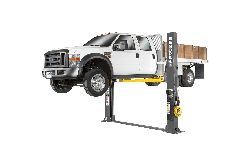
Wrenchers has over 150 car lifts for sale in our online catalog, ready to ship to your garage or shop. You’ll find two-post lifts, four-post lifts, mobile column lifts, scissor lifts, parking/storage lifts, and more, with capacities ranging from around 7,000 lbs to 30,000+ lbs. Browse the product listings below to compare features, specs, and prices, and don’t hesitate to contact us if you need help choosing the right lift.
Items 1-12 of 184

Set Descending Direction
Page
per page

How to Choose the Best Car Lift for Your Vehicle

Selecting the best car lift comes down to your vehicle type, available space, and intended use. Consider factors like vehicle weight/size, ceiling height, and concrete floor requirements before deciding on a lift. Two-post lifts are the preferred lift for most professionals as they allow the most access to vehicle components, while four-post lifts are some of the most versatile, offering both vehicle storage and service capabilities. Additionally, Wrenchers carries a full line of parking lifts, which are an excellent, cost-effective solution for maximizing vehicle storage space in both commercial and residential parking. Portable car lifts are another solution for optimizing available space. Featuring compact designs and plenty of power, portable lifts are simple to use and easy to stow away, making them the perfect car lift for garage work or an extra shop bay.

Car Lift FAQs

What are the different types of car lifts?

There are several types of car lifts, each suited to different purposes:

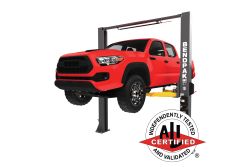
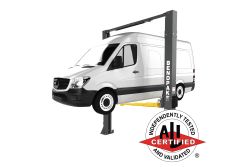
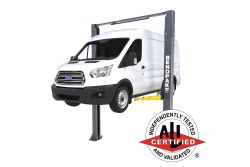
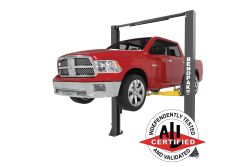
  • Two-Post Lifts: Feature two upright posts and adjustable arms that lift the vehicle by the frame. Space-efficient and typically used for vehicles up to about 18,000 lbs.
  • Four-Post Lifts: Have four columns and runways that you drive onto. They are very stable and often have higher capacity. Great for storing vehicles (you can park one car under another) and for general maintenance
  • Scissor Lifts: Uses an accordion-like mechanism to raise the vehicle. They're popular where space is tight because many can collapse flat to the floor when not in use.
  • Portable Lifts: This category includes any easily movable lift. Many scissor lifts are portable and are excellent for home garage use or mobile mechanics.
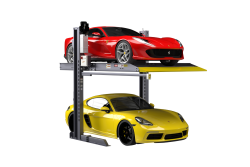
  • Parking Lifts (Car Stackers): These lifts are intended primarily for vehicle storage rather than service. A parking lift lets you park one vehicle on a platform and another beneath it to maximize vertical space in a garage. Parking lifts are common in both home garages and commercial parking facilities.
  • Mobile Column Lifts: These are heavy-duty lifts consisting of independent columns that can be positioned at each wheel of a large vehicle (like buses, trucks, or commercial vehicles). Each column has its own hydraulic jack and they operate in sync to lift the entire vehicle.

Car lift prices can range widely depending on the type, capacity, and features. Installation is another cost to consider if you're not installing it yourself. Professional installation might add a few hundred to over a thousand dollars, depending on the complexity. Always check what's included since some lifts come with free shipping or extra accessories.

High-capacity car lifts (for lifting heavy trucks, commercial vehicles, or multiple cars at once) are available through specialized equipment dealers and manufacturers. Wrenchers carries an assortment of heavy-duty lifts and can special-order models that go beyond our standard catalog. It's wise to Consult our product specialists when shopping for a high-capacity lift, since installation requirements (like concrete footing, electrical supply, and bay space) become more critical with these larger units.

Choosing the right car lift involves evaluating several key factors:

  • Vehicle Type and Weight: Consider the heaviest and largest vehicle you plan to lift. Your lift's capacity should comfortably exceed that weight (with some buffer). Also, the vehicle's dimensions (width, length, wheelbase) need to fit the lift. E.g., ensure a four-post's runways are long enough for your longest car, and a two-post's arms can reach the frame pick-up points
  • Garage Space and Ceiling Height: Measure your garage or shop to understand what size lift can be installed. For example, most two-post lifts need roughly a 10-foot ceiling or higher for safe clearance. Four-post lifts have lower posts, but if you intend to park a vehicle on top, you need enough height for the elevated car plus one underneath. Also, check the floor space. Ensure the concrete slab thickness meets the lift's requirements (typically 4 inches of reinforced concrete at 3000 PSI for many residential lifts).
  • Purpose (Maintenance vs Storage): Think about what you'll use the lift for most. If you're primarily doing mechanical work (oil changes, tire/brake jobs, engine work), a two-post or scissor lift that offers wheels-free access may be best. If you also want to store vehicles, a four-post or parking lift might serve better
  • Frequency and Volume of Use:If you're a hobbyist working on your own cars occasionally, a hobby-grade lift will suffice. For high-volume or commercial use, you'll want a proven commercial-grade lift (often ALI-certified) that can stand up to daily operation. Commercial lifts may cost more upfront but offer greater durability and often better warranty/service support.
  • Mobility Needs: If your situation requires moving the lift or you can't commit to a permanent install (for example, a rented space or a multi-use garage), consider a portable lift. However, portable models can have trade-offs in capacity and max height. A bolted-down lift will feel more stable for frequent use, if your location allows it.
  • Budget: Determine a price range you're comfortable with, balancing it against the features you need. Include delivery, installation (if hiring a pro), and any necessary garage modifications in your budget. Sometimes spending a bit more for a reputable brand or higher capacity can pay off in peace of mind and longevity.
  • Brand and Certification: Stick with well-known lift manufacturers and look for ANSI/ALI ALCTV certification, which indicates the lift meets strict safety standards. Leading brands have service networks and parts availability, which is important for maintenance down the line. Wrenchers carries lifts from industry-proven brands so we can help guide you to a reliable model.

Yes, many car lifts are absolutely suitable for home garages, as long as you have the space and proper setup. Simple tasks like oil changes and brake jobs become much easier when you can stand under the car.
A residential garage with a ceiling around 10 feet high can accommodate a typical two-post or four-post lift in most cases. If your ceiling is a bit lower (8-9 feet), you still have options like mid-rise scissor lifts, low-clearance two-post lifts, or a portable two-post designed for lower ceilings.
For example, portable QuickJack lifts are great for home garages with low ceilings. They come in several sizes and frame lengths, with capacities ranging from 3,500 to 7,000 lbs. and lifting heights between 20 and 24 inches. MaxJax, another brand of portable two-post car lifts, can carry up to 6,000 lbs. and have a lifting height of 48" so you can get full-sized lift advantages at your home garage. Of course, your garage floor must be able to support the lift. Typically, a concrete slab of 4 inches thick (with proper reinforcement) is the minimum for safely anchoring a lift. Most modern home garage floors meet this, but older or thinner slabs might need to be reinforced.
Also, check your lift's power requirements. Be prepared to have an electrician wire an appropriate outlet if needed. Additionally, some four-post lifts use hydraulic power units that plug into 110V but draw a lot of current, so ensure your electrical circuit can handle it.
Just remember that even at home, safety protocols must be followed (never overload the lift, use the safety locks, etc.). If multiple family members will use it, make sure everyone is trained on proper operation.

Car lifts come in a range of weight capacities. Most standard automotive lifts are rated between about 6,000 lbs to 40,000 lbs. Here's a breakdown:

  • Portable & Entry-Level Scissor Lifts: Often 5,000 to 7,000 lbs capacity. These are sufficient for compact cars, sedans, and many SUVs, but might be marginal for heavy pickup trucks.
  • Two-Post Lifts: Typically 7,000 to 10,000 lbs capacity. A 9,000 or 10,000 lb two-post is a popular size as it can lift most cars, SUVs, and half-ton trucks. Some two-post lifts may have a capacity of up to 15,000 or more.
  • Four-Post Lifts: Usually 9,000 to 40,000 lbs. A 9,000 lb four-post is common for home use (good for cars and some trucks) while 40,000 lb lifts could be used for heavier trucks, commercial vans, or for added safety margin.
  • Mobile Column Lifts: Each column might support 16,000 to 18,000 lbs, and by using 4 or 6 columns in tandem, they can lift vehicles of 60,000+ lbs (like transit buses or fire trucks).

The weight capacity of a lift must exceed the weight of the vehicle you intend to lift, including any cargo that might be in it. Always adhere to the manufacturer's posted capacity and never overload a lift (this is a critical safety rule). All lifts sold on Wrenchers clearly list their weight capacities, and many are ALI certified, which means they've been tested to handle 1.5 times their rated load as a safety factor.

  • Better Access: Comfortable undercarriage access for oil changes, brakes, exhaust, and engine work.
  • Increased Safety: Mechanical locks and high safety factors reduce risk compared to floor jacks.
  • Space Saving: Vertical storage doubles parking capacity in home or commercial garages.
  • Efficiency: Faster work with adjustable heights and easy raise/lower controls.
  • Professional Results at Home: Enables advanced DIY projects closer to shop-level capability.

Safety is paramount when operating a car lift. Here are some safety precautions and best practices to follow:

  • Ensure Your Lift is ALI-Certified: Every automotive lift installed in the United States and Canada must be inspected at least annually. ALI-certified lifts will meet all the national lift safety standard inspection requirements.
  • Inspect the Lift Daily: Perform a pre-use inspection each day (or before each use). Check for any obvious wear, damage, or fluid leaks. Ensure cables or chains are in good shape, the safety latches are working, and the area is clear of obstructions. Never use a lift that has frayed cables, bent components, or malfunctioning locks. Follow the lift manufacturer's maintenance schedule. This may include annual inspections by a certified lift inspector, like ALI's Check360™ Certified Lift Inspections.
  • Vehicle Positioning: Always position the vehicle correctly on the lift. Use the manufacturer's recommended lift points on the car's frame or chassis–this information can be found in the vehicle's service manual.
  • Raise Slowly & Stay Attentive: When lifting, do it gradually and listen/feel for any unusual noises or shifting. Many lifts recommend lifting the car a few inches, then pausing to check stability.
  • Engage Safety Locks: Never work under a lift that is only supported hydraulically. Always raise the lift to the desired height, then lower it slightly into the locking position so that the mechanical locks engage.
  • No Overloading: Never exceed the rated capacity of the lift. Also consider the weight distribution; a heavy vehicle with most weight at one end (e.g., a loaded truck) should be positioned so weight is balanced between the posts.
  • No Passengers: No person (or pet!) should be inside the vehicle or on the lift when it is being raised or lowered. Also, keep bystanders well clear of the lift while in operation.
  • Stay Clear During Lifting/Lowering: When raising or lowering the vehicle, stand near the controls, keeping clear of the vehicle in case it shifts. Accidents can occur from people placing body parts (hands, feet) in pinch points.
  • Watch Overhead Clearance: Know the height of the vehicle on the lift, especially with vans, SUVs, or trucks. Be sure that when raised, the vehicle (or an open hood/tailgate) won't hit the ceiling, lights, or garage door.
  • Never Override Safety Features: Lifts come with safety switches and limiters (e.g., a max height shutoff bar). Do not disable or bypass these. They are there to prevent accidents. If a safety lock is not engaging properly, do not use the lift until it's fixed.
  • Emergency Preparedness: Know where the emergency stop or kill switch is (if equipped) and how to lower the lift manually in case of power loss. If a lift ever fails or a vehicle is stuck, call a professional for help. Do not fiddle with a loaded, malfunctioning lift.

Safety is paramount when operating a car lift. Here are some safety precautions and best practices to follow:

  • Ensure Your Lift is ALI-Certified: Every automotive lift installed in the United States and Canada must be inspected at least annually. ALI-certified lifts will meet all the national lift safety standard inspection requirements.
  • Inspect the Lift Daily: Perform a pre-use inspection each day (or before each use). Check for any obvious wear, damage, or fluid leaks. Ensure cables or chains are in good shape, the safety latches are working, and the area is clear of obstructions. Never use a lift that has frayed cables, bent components, or malfunctioning locks. Follow the lift manufacturer's maintenance schedule. This may include annual inspections by a certified lift inspector, like ALI's Check360™ Certified Lift Inspections.
  • Vehicle Positioning: Always position the vehicle correctly on the lift. Use the manufacturer's recommended lift points on the car's frame or chassis–this information can be found in the vehicle's service manual.
  • Raise Slowly & Stay Attentive: When lifting, do it gradually and listen/feel for any unusual noises or shifting. Many lifts recommend lifting the car a few inches, then pausing to check stability.
  • Engage Safety Locks: Never work under a lift that is only supported hydraulically. Always raise the lift to the desired height, then lower it slightly into the locking position so that the mechanical locks engage.
  • No Overloading: Never exceed the rated capacity of the lift. Also consider the weight distribution; a heavy vehicle with most weight at one end (e.g., a loaded truck) should be positioned so weight is balanced between the posts.
  • No Passengers: No person (or pet!) should be inside the vehicle or on the lift when it is being raised or lowered. Also, keep bystanders well clear of the lift while in operation.
  • Stay Clear During Lifting/Lowering: When raising or lowering the vehicle, stand near the controls, keeping clear of the vehicle in case it shifts. Accidents can occur from people placing body parts (hands, feet) in pinch points.
  • Watch Overhead Clearance: Know the height of the vehicle on the lift, especially with vans, SUVs, or trucks. Be sure that when raised, the vehicle (or an open hood/tailgate) won't hit the ceiling, lights, or garage door.
  • Never Override Safety Features: Lifts come with safety switches and limiters (e.g., a max height shutoff bar). Do not disable or bypass these. They are there to prevent accidents. If a safety lock is not engaging properly, do not use the lift until it's fixed.
  • Emergency Preparedness: Know where the emergency stop or kill switch is (if equipped) and how to lower the lift manually in case of power loss. If a lift ever fails or a vehicle is stuck, call a professional for help. Do not fiddle with a loaded, malfunctioning lift.

  • Two-Post Lift Dimensions: A common two-post lift has posts roughly 9 to 12 feet tall (depending on if it's a low-clearance model or a taller clear-floor model). The width between the two posts is often around 8 to 10 feet (enough to fit a car between with some room to swing doors open). Overall floor width required is usually about 10 feet or more.
  • Four-Post Lift Dimensions: Four-post lifts generally take up more floor space. A typical home garage 4-post (for vehicles up to 18 feet long) might have an overall length of around 14 to 18 feet and an overall width of between 8 and 9 feet. The height of the columns is often about 7 or 8 feet for a standard model, which is low enough for residential garages.
  • Scissor Lift Dimensions: When fully lowered, scissor lifts are very compact. Some are flat platforms around 4 to 7 feet long and maybe 3 to 4 feet wide. When raised, they don't have "posts," but the car will be elevated on top of the scissor mechanism which may lift anywhere between 20 and 80 inches, depending on the rise of the lift.

The required concrete thickness for a car lift depends on the lift type and capacity, but generally most two-post and four-post lifts require a minimum concrete slab thickness of 4 inches. The concrete should be sound, reinforced concrete (usually at least 3000 PSI compressive strength). Plus, the maximum allowable slope of pre-existing concrete is three degrees.
Existing concrete floors should be test-drilled to verify minimum floor thickness and to confirm building drawings. A core sample should be obtained and tested to verify minimum floor compressive strength. When investigating floor properties, consult building drawings to verify proper floor reinforcement.
Here are some other concrete requirements to know before installing a car lift.

  • Do not install any car lifts on expansion seams or cracked or defective concrete. All 3/4 inch diameter anchors must be a minimum of 6 inches away from any expansion seams, control joints, or other inconsistencies in the concrete.
  • All anchors must be a minimum of 6" away from any expansion seams, control joints, or other inconsistencies in the concrete. Refer to the anchor manufacturer's specifications for specific information concerning edge distances and bolt-to-bolt distance requirements.
  • Do not install a lift on hand-mixed concrete.
  • Do not install any lift on a secondary floor level or ground floor with a basement beneath without written authorization from the building architect and prior consultation and approval from your lift vendor.

Ready to talk?

We have product specialists with years of experience ready to answer your questions and help you through the car lift buying process.

Contact Us

We're here Mon-Fri, 7am to 6:30pm CT